

VI MØTES PÅ DIKEMARK
Asmaa Barakat
Per Kristian Nygard
Signe Solberg
Audgunn Vilhelmsen
Marthe Berger Walthinsen
June 14 - October 10, 25
Opening hours: Wednesday, Saturday and Sunday 12-4pm, and by appointment .
Would you like to book a tour? Send an email to: info@kunsthalldikemark.no
The exhibition is supported by Akershus fylkeskommune , Kulturrådet , Asker kommune , Free Word, Astri Brun's Creative Fund and Fargerike Asker.
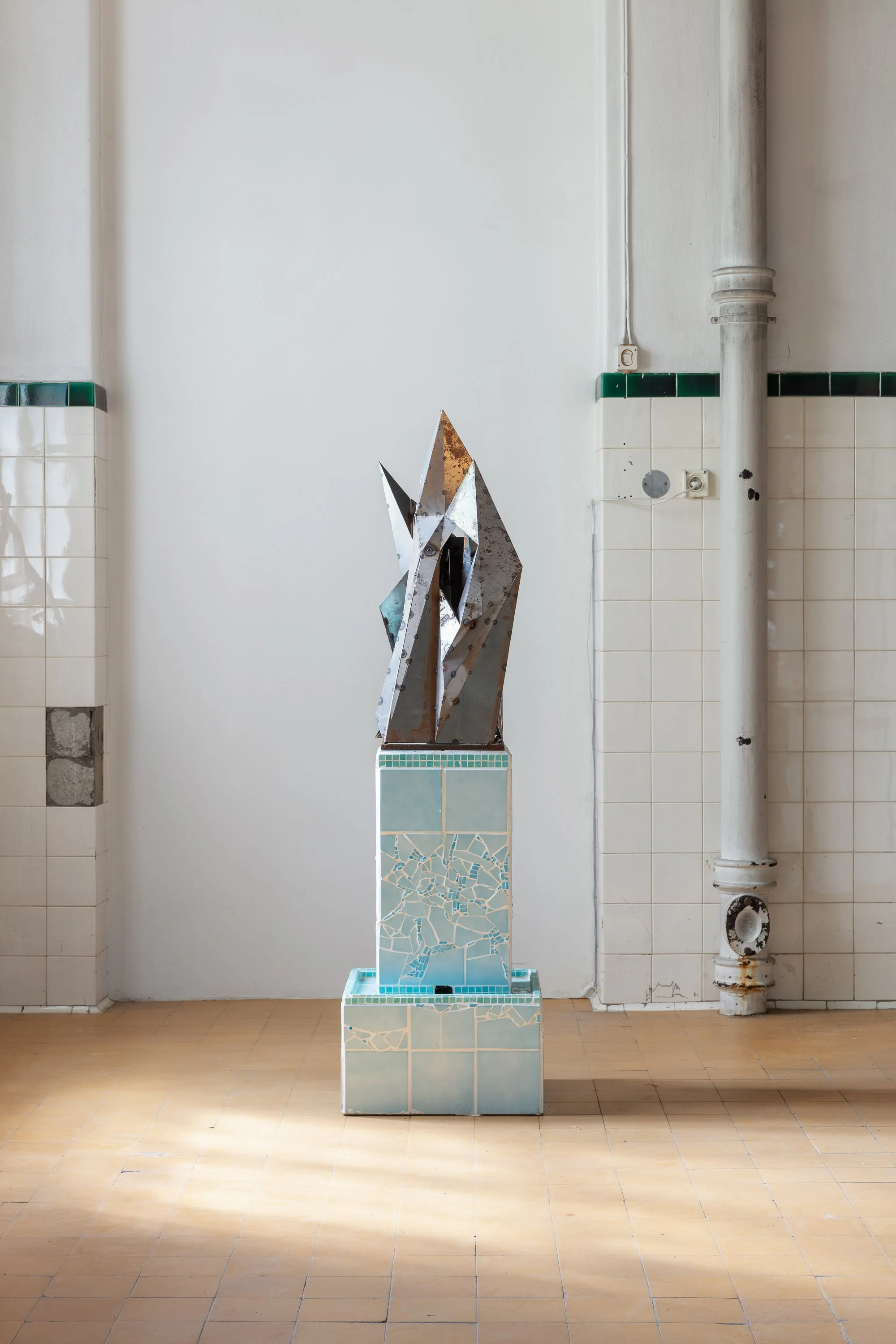
Signe Solberg, All children cry. Photo: Tor S. Ulstein
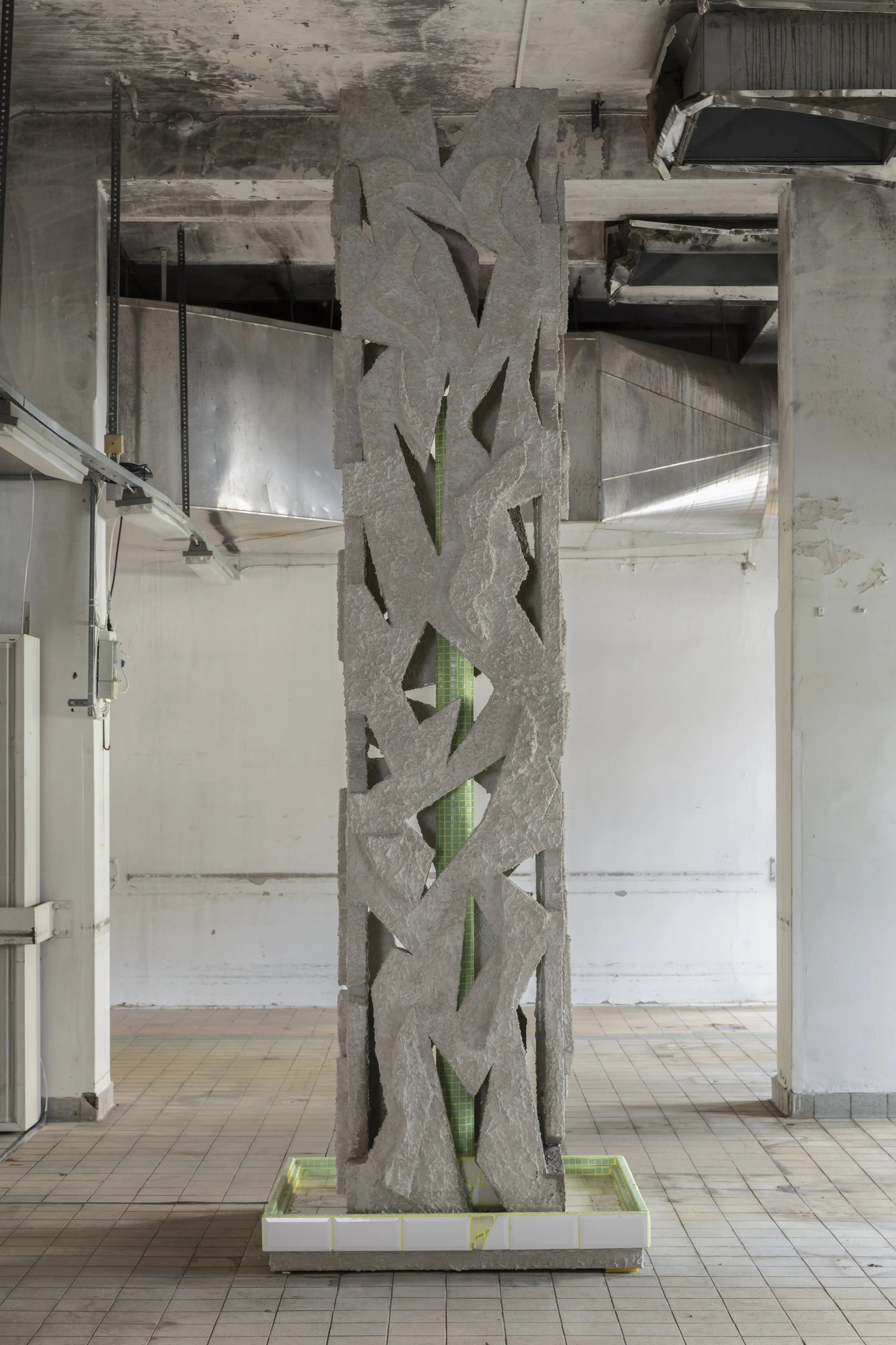
Signe Solberg, Keep it safe, keep it alive. Photo: Tor S. Ulstein
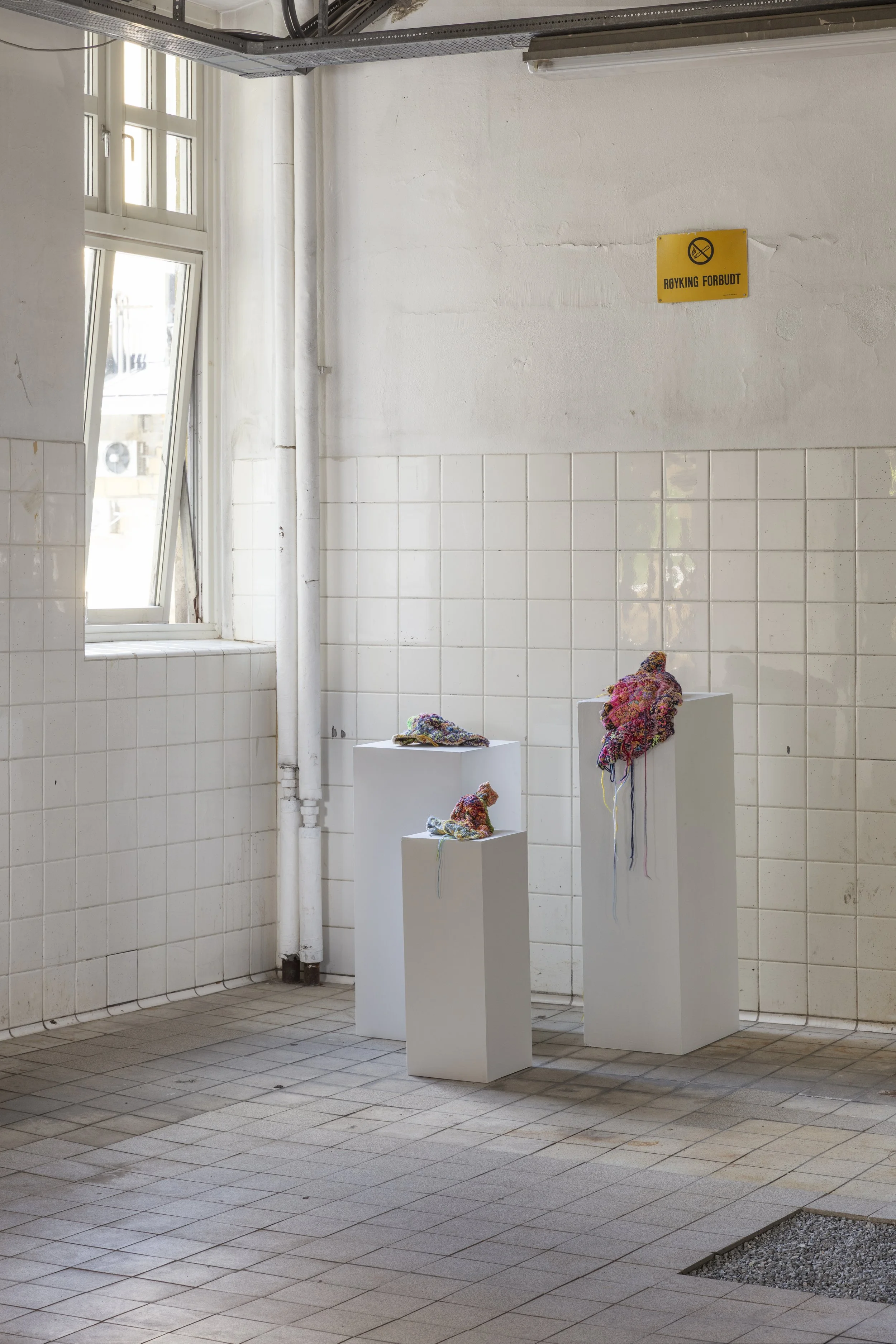
Audgunn Vilhelmsen, Untitled. Photo: Tor S. Ulstein
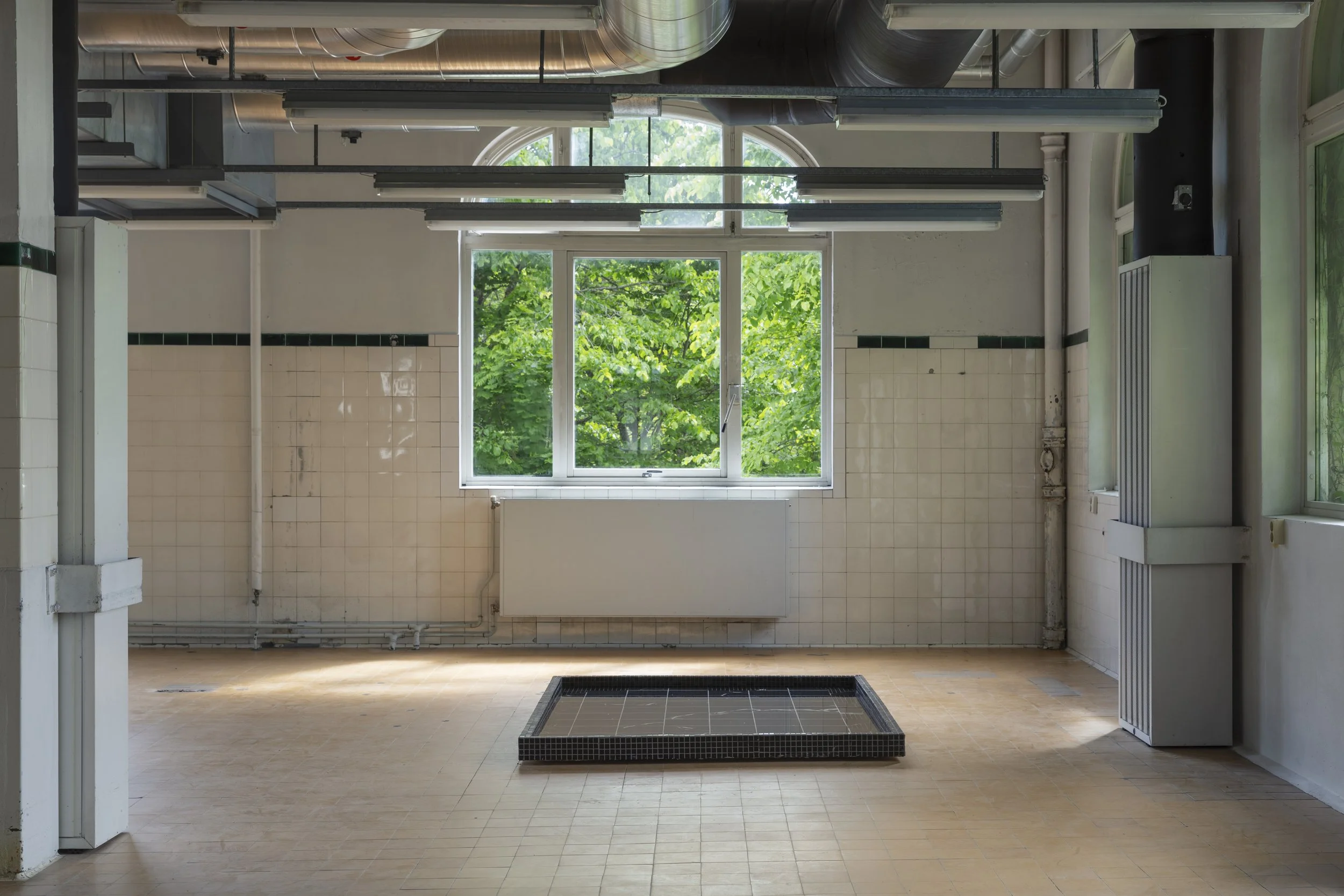
Signe Solberg, The last ones standing and the first ones waking up. Photo: Tor S. Ulstein
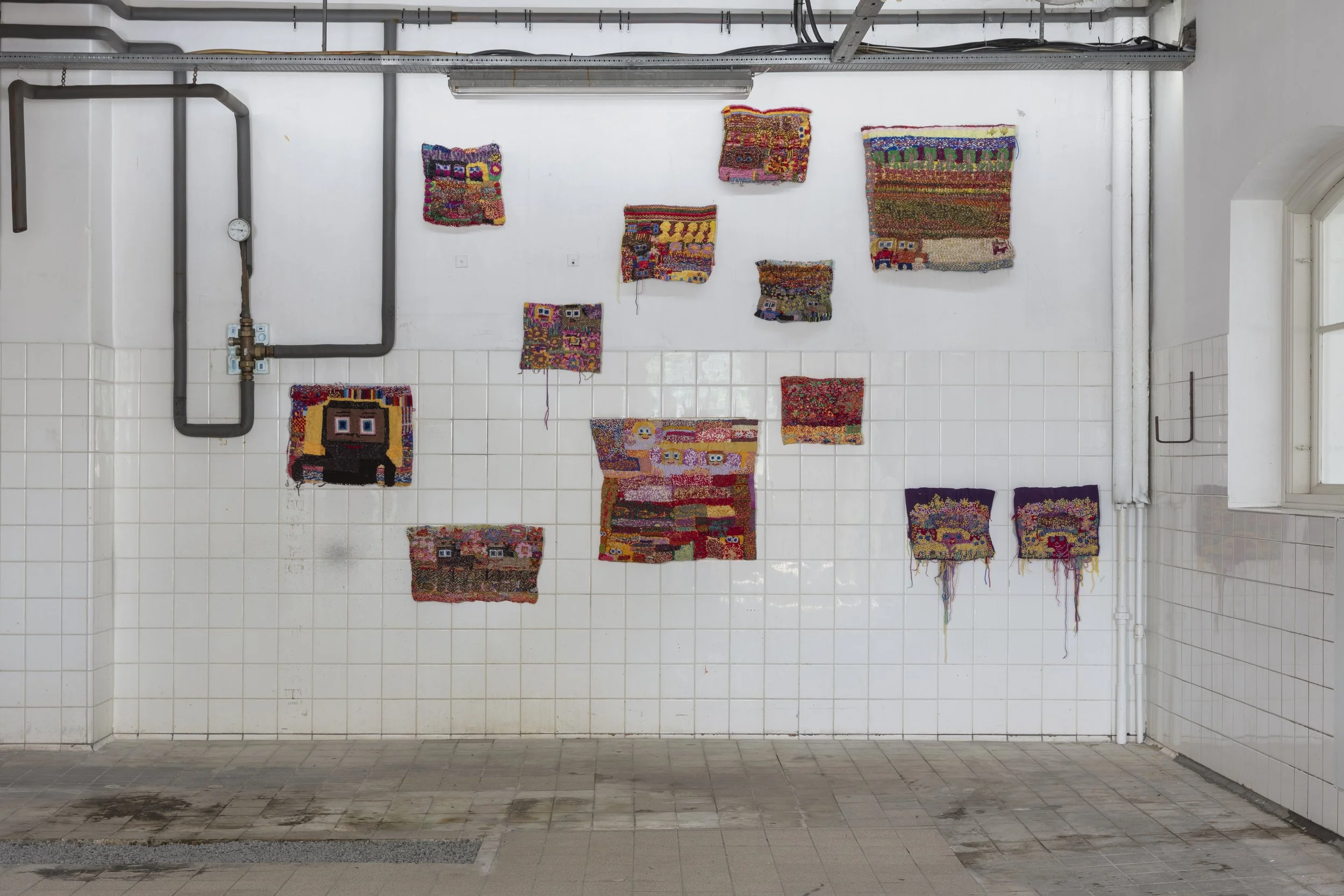
Audgunn Vilhelmsen, Untitled. Photo: Tor S. Ulstein
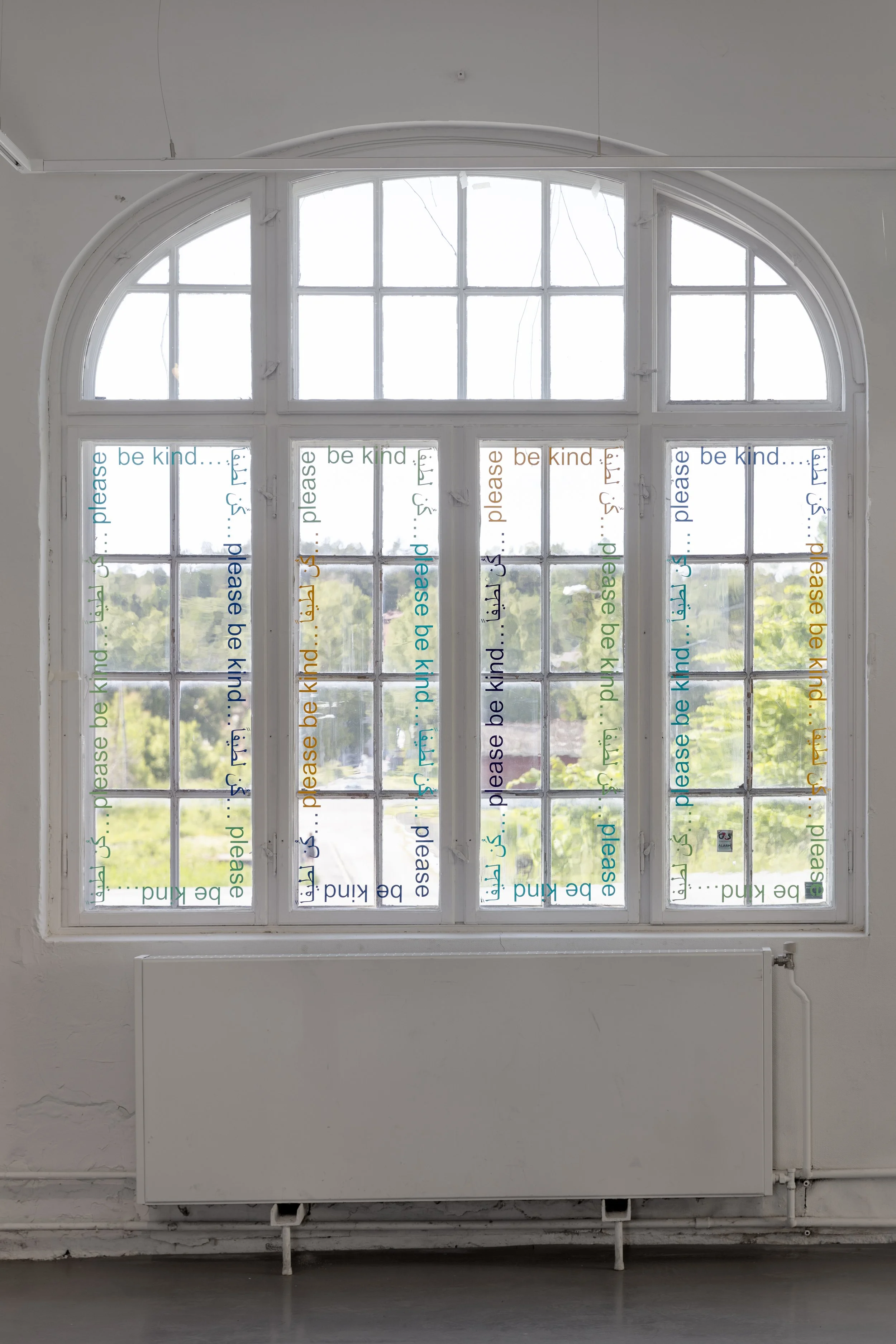
Asmaa Barakat, please be kind… كُن لطيفاً. Photo: Tor S. Ulstein
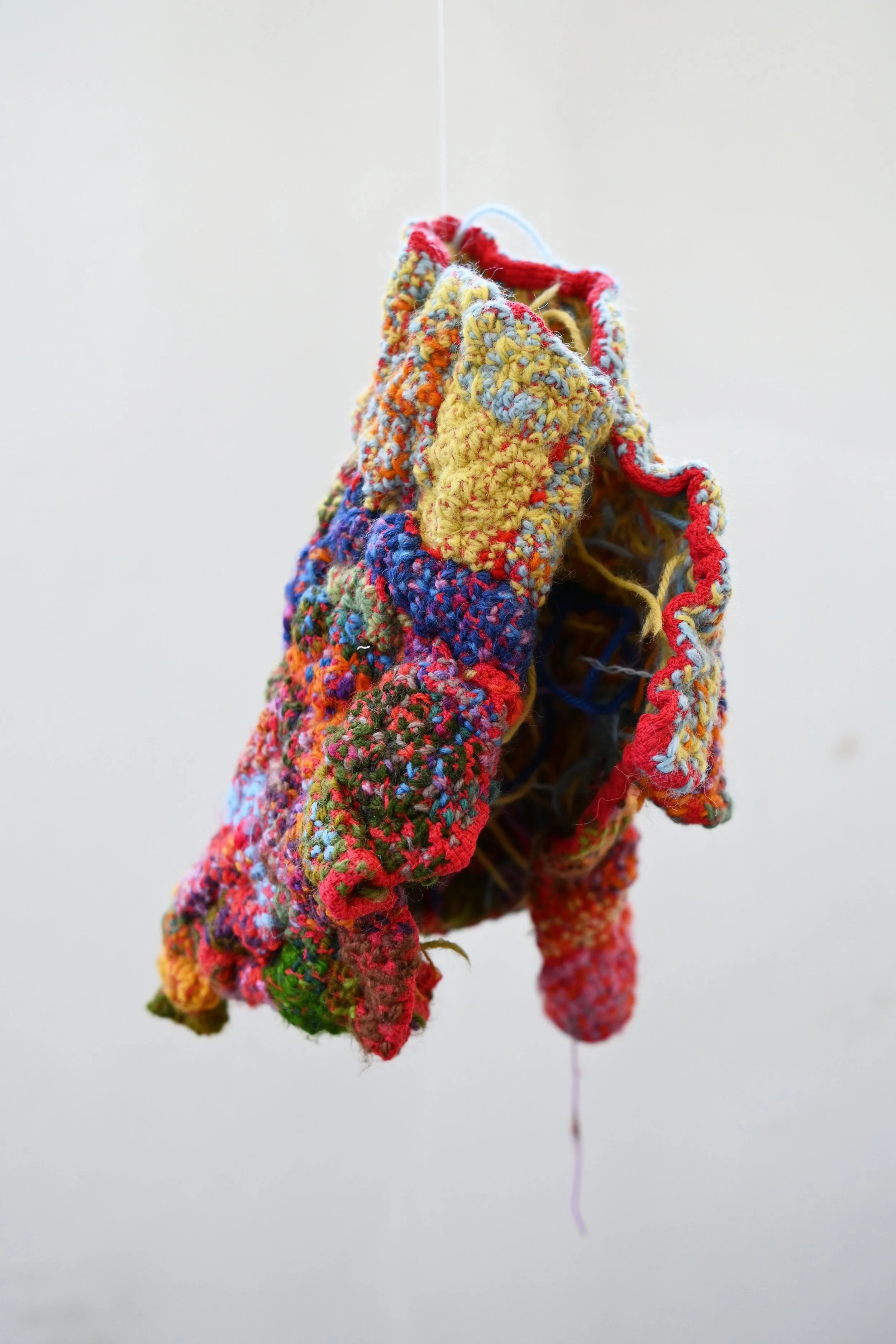
Audgunn Vilhelmsen, Untitled. Photo: Kunsthall Dikemark
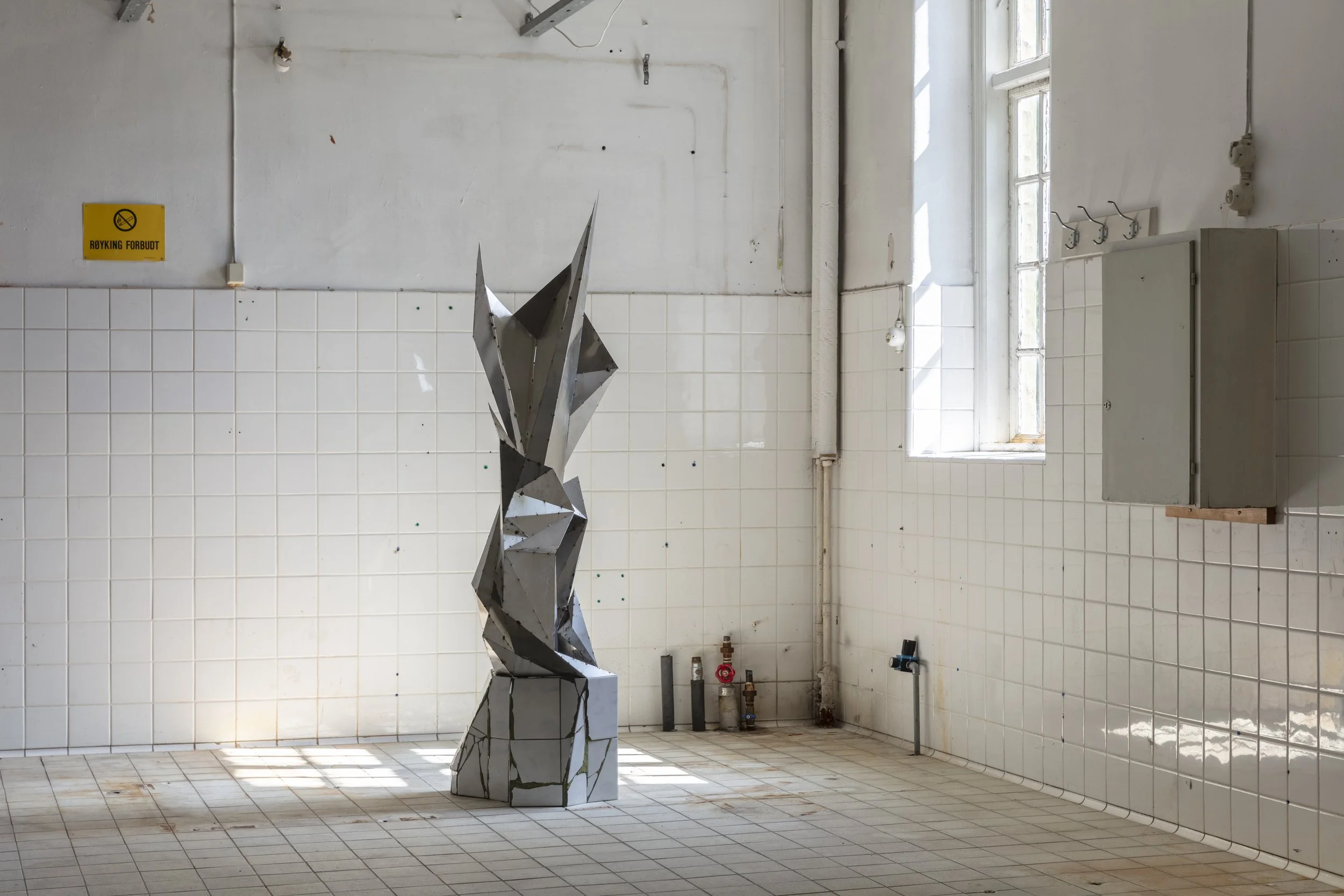
Signe Solberg, Turtles don't have ears. Photo: Tor S. Ulstein
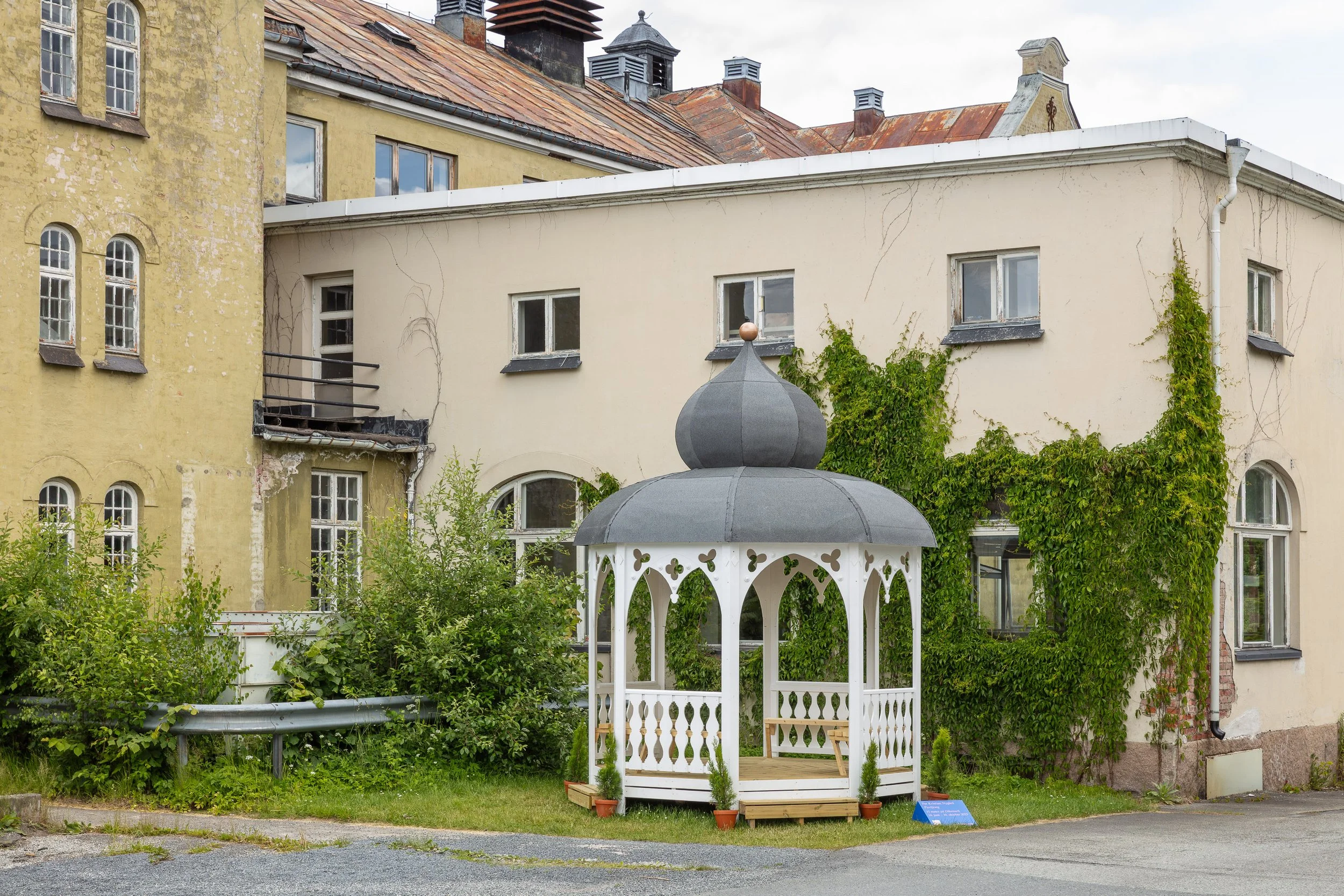
Per Kristian Nygård, Pavilion (2025). Photo: Tor S. Ulstein

Marthe Berger Walthinsen, Geriljahage (2025). Photo: Bjørn Faafeng.
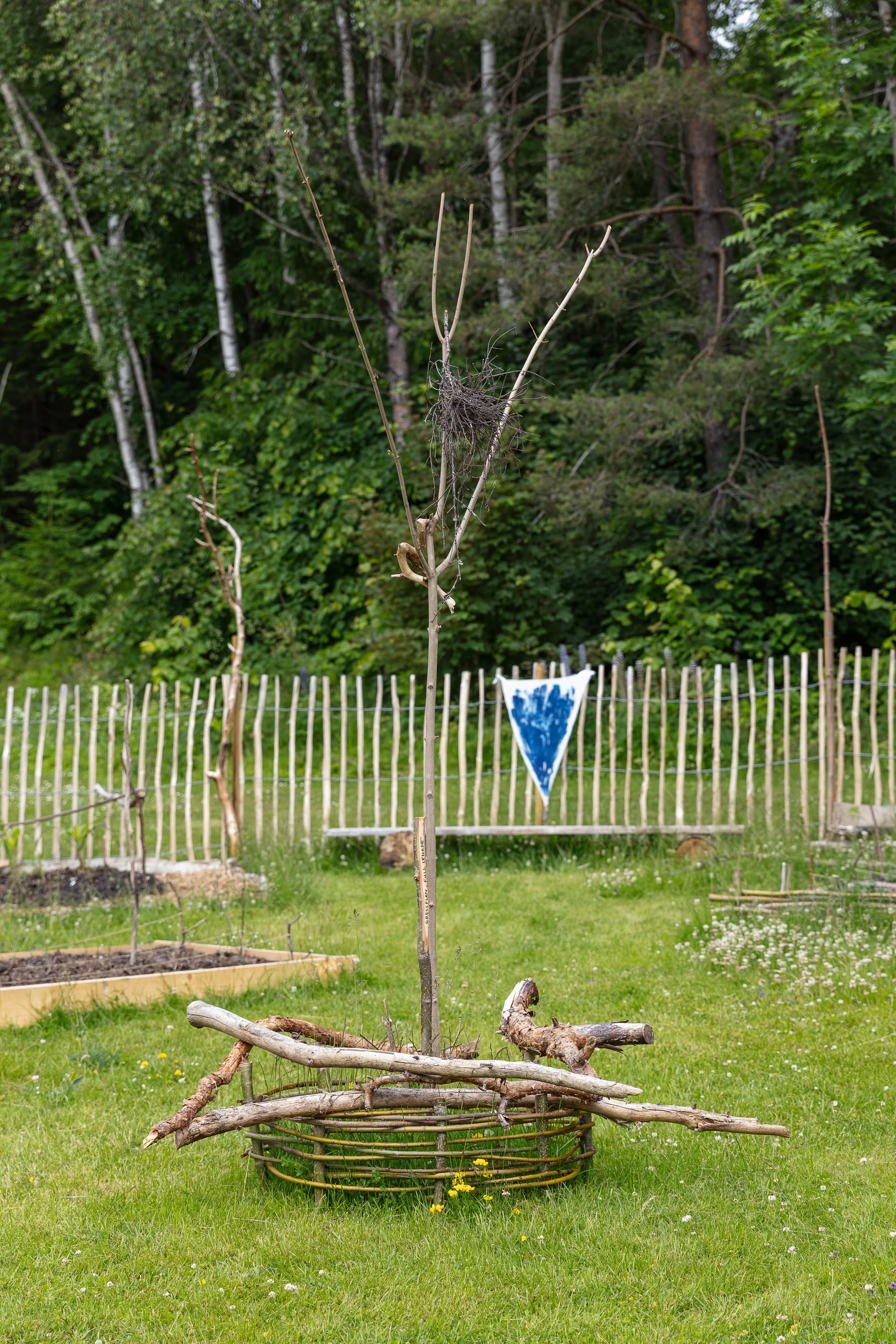
Marthe Berger Walthinsen, Geriljahage (2025). Photo: Tor S. Ulstein
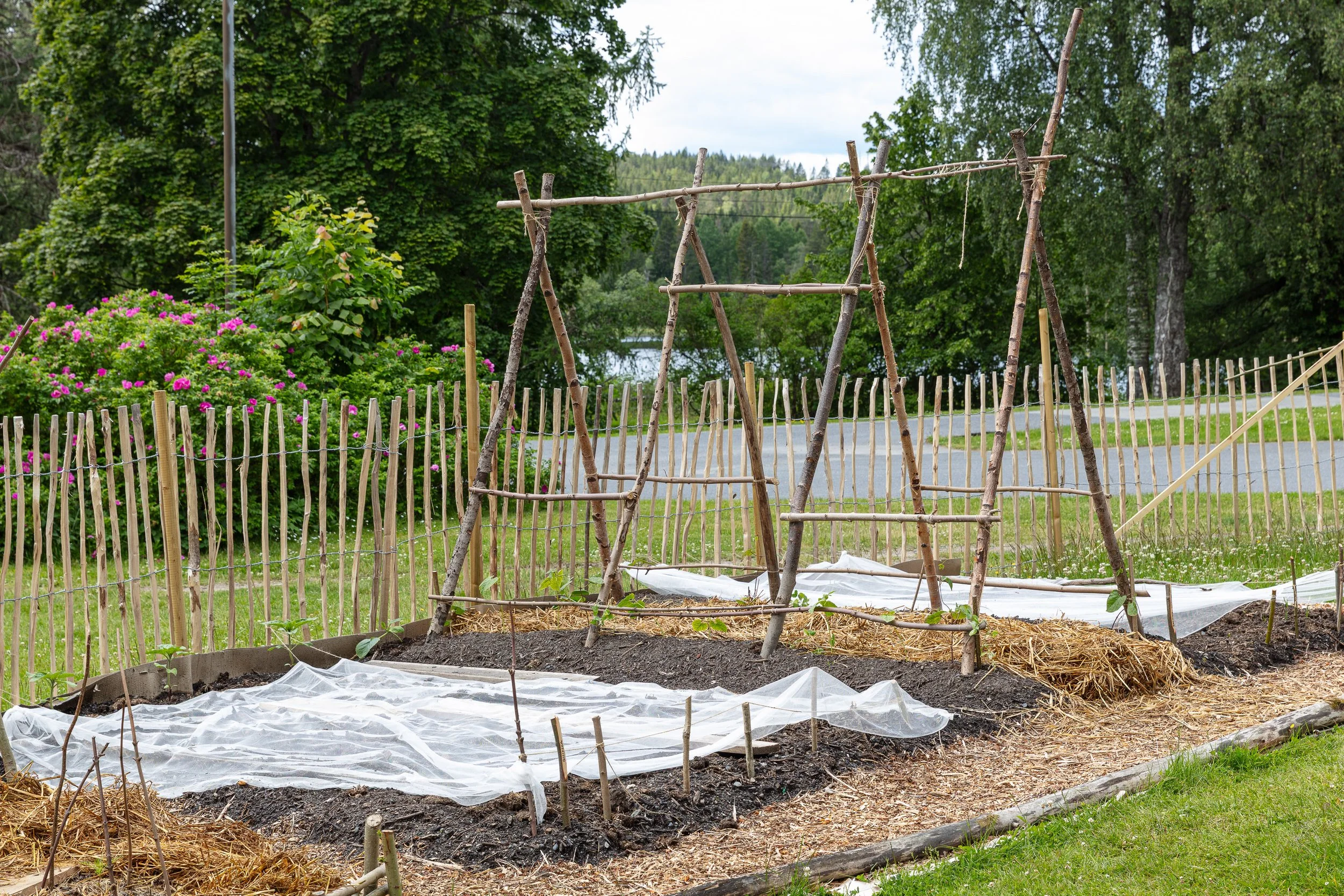
Marthe Berger Walthinsen, Geriljahage (2025). Photo: Tor S. Ulstein
VI MØTES PÅ DIKEMARK
The old laundry at Dikemark has become an art hall. Through different eras, it has been transformed from being an active arena where patients and hospital staff worked, to an abandoned and dilapidated room, an now into being resurrected in a new form as a display space for art. Still with visible traces, wires and holes that testify to machines that have been torn out, dismantled or thrown away. Like all such rooms, this one too has an aura of absence. Of something that has been taken out, but is now being moved back in a different form.
The visual conversation between Signe Solberg and Audgunn Vilhelmsen displayed in the hall takes up both the architectural peculiarities and the remnants of this, while the works breathe life into the former human activity in the space.
Both artists have a liberatingly casual attitude towards materiality and structures, while their works have an inherent precision and thoroughness.
Signe Solberg's sculptures, made of metal and concrete, are distinguished by their rigor and monumentality. The sculptures also function as fountains with flowing water. The acoustic meditativeness of the trickling water connects the works to the room's starting point; the water as a supporting element for the entire room's function. It can be experienced as if Solberg's sculptures have arisen in this very hall; an echo of broken tiles and reflections in metal, mirror the remaining walls, also in the use of color. In sharp relief to empty taps, the sculptures stand and make us aware of time, everything that flows.
Audgunn Vilhelmsen is shown together with Solberg. Her color-saturated and compact textiles meet Solberg's sculptures along another historical axis; that which was washed, ironed, folded. Vilhelmsen's works want something different; they do not want to conform to a system. They are knotted, embroidered and knitted. Variations on thread that does not conform, living thread that is transformed into something pulsating and organic. The textiles are corporeal, self-enclosing, with a strong presence. The color-dappled surfaces are almost audible, like the trickling water.
In an extraordinary space like this, art and architecture merge along new lines. History, works and architecture are transformed and included in a total work of art, a holistic project where the space is experienced as a state we are invited to enter. The tight monumental sculptures without pedestals and the textiles with loosely hanging free threads point towards a new and promising history for this space.


The architecture at Dikemark is the focus of this year's seasonal initiative. In different ways, the artists angle themselves towards the outdoor areas, and specifically the building stock. What and how we build says a lot about the prevailing trends in a society. It also says a lot about who has the power to define and which ideas are allowed to exist.
Asmaa Barakat's text work directly on the windows of the Laundry Building is a quiet but urgent call to see these things in context. The laundry building dates back to the last century and was primarily a workplace for patients at Dikemark. Barakat's text "Please be kind" is an open and layered work that can be read in many ways.
Is she referring to the decay? The bricks that are loosening and crumbling from the building? To the story of the patients? Or is it directed at us and how we as citizens interact with each other?
The text is also written in Arabic. This opens up several associations. Some possibly unpleasant, for what story and to whom are we now addressing ourselves? Outsiderness and a fear of what we experience as different are also thematized in this work.
This ambiguity is also found in Per Kristian Nygård's quirky, neo-Gothic pavilion. Nygård's project is both humorous and deeply serious. An investigation into the connections between power and architecture. The development of Dikemark and what will happen to the buildings, lies as a very concrete backdrop. The presence of the Thuja plant as a disturbing symbol of gentrification and artificial approach to nature. Nygård's work makes us aware of the links between what is considered to be economically profitable architecture in stark contrast to the architectural ideas that were promoted at Dikemark a hundred years ago. Function and aesthetics were not mutually exclusive; door handles and windows were part of a holistic thinking around the design of the architecture.
Nygård looks back a notch when he introduces Gothic as his aesthetic preference. A playful look at today's architectural rebellion and how one longs to return to another era, such as the neo-Gothic movements around 1900.
Barakat and Nygård's works are clear contributions to a broader social and artistic discourse. A raising of awareness about how we relate to each other and exercise power over our surroundings.

GERILJAHAGE
When Marthe Berger Walthinsen's kitchen garden at the Doctors' Building has also been given the prefix "guerrilla", the tone has been set for something that this project is about. A garden can be so many things. In addition to being a sanctuary, with lush flowers and green plants, it is also potentially a place where not everyone is allowed to enter. The garden symbolism is extensive; from the well-kept and ornamental garden to the more untidy and sprawling one. A place where man can compete with nature, or must give up.
This garden also has a fence, but it is there to protect what is being grown. And, anyone who wants to is welcome in. It looks trustworthy and friendly. Is this really a “guerrilla hunting garden”?
We might think that "guerrilla" is synonymous with something that goes outside the systems. However, if you look for a synonym for "guerrilla", you will also find the word "flock". Both interpretations are relevant to Berger Walthinsen's project: there is something both unruly and at the same time unifying about this project.
Dikemark is still unbeatably beautiful, but it is falling into disrepair. From being a self-sufficient community with gardens, fountains and farms, there is less of everything now, although the trees are left standing and daisies grow in the lawn.
The potential that these green lawns have to become new homes for wildflowers, vegetables – all plants that bees and bumblebees like – is put on hold. The lawns are protected. No cultivation or sowing is allowed, just keeping the greenery intact. This means that you should preferably not put anything in the soil and that everything that is done must be reversible. However, that is Berger Walthinsen's project: dig-free and reversible. She shows the potential of a conscious and sensitive approach to a protected place. To sow, care for and harvest, and then leave everything to nature again and a new annual cycle of decomposition, dormancy and reflection.
She focuses on our way of cultivating the land, small-scale agriculture and nature-friendly sustainability. How do we take care of the land and, indirectly, each other? These are big questions and this project has the strength that both the sensual, down-to-earth and the abstract ideas find space. It is also an investigation of what we humans do with ourselves and our surroundings. Dikemark as an area is facing an upheaval. Wars and climate change are making the world around us darker. But out of chaos a new order can grow and the gardener can be seen as a steward and redeemer, through the artistic project.
Signe Solberg (b. 1985) works with sculpture, installation and site-specific art. The works relate specifically to space, architecture and landscape, with narratives that change and expand over time. The works, or parts of them, are often reused, manipulated anew and placed in new contexts. The body's capacity and the visibility of the hands are central to a direct work in metal and other industrial materials, where the extremes are tested in the face of one's own physics. Monumentality, bodily experiences and the challenge of cultural language of power are recurring themes in the works.
Solberg is a graduate of the Oslo National Academy of the Arts and has had solo exhibitions at ISCA Gallery Oslo (2025); Trøndelag Center for Contemporary Art, Trondheim, (2023); Kristiansand Kunsthall, (2021); Bomuldsfabriken Kunsthall, Arendal, (2017); and the Vigeland Museum, Oslo, (2015). Public commissions include Nye Kirkenes sykehus , Norwegian Health Archives, Kolbotn School, Oslo Central Station, REV Ocean Research Vessel and Kunstarena Torbjørnsbu mines. Her works have been acquired by a number of public and private art collections, including Sørlandets Kunstmuseum, Oslo Municipality's Art Collection, Bomuldsfabriken Kunsthall, Norges Bank and Equinor Art Programme. In 2023 she was commissioned to create a series of new works for the exhibition Hierro at Estudio Figueroa-Vives, Havana, Cuba. Solberg lives and works in Hobøl, Indre Østfold.
Audgunn Vilhelmsen (b.1963) is a self-taught artist who lives and works in Lista. For many years she has been associated with Galleri Lista Fyr, which has shown several of her works and supported her work. She works with embroidery, textiles, painting and drawing. These are color-saturated works that insist on communication and dissemination of, among other things, natural experiences. Vilhelmsen has shown works at, among others, Skagen Kunstforening in 1999, Kunst og kitsch, Vestagdermuseet, Nordberg fort 2024, ALONE Galleri Lista Fyr/ Europa tourè, Trastad Samlinger 2007/08 and Bratislava, Slovakia in 2016. She also participated in "Swans from Lazarus Valley – Norwegian Outsider Art" at Trafo Kunsthall in 2019. Vilhelmsen has been purchased by KODE Art Museum in 2019, Trastad Samlinger, Skagen Art Association and the Ministry of Foreign Affairs, among others. An art book was published in 2019 with works by Audgunn Vilhelmsen and poems by Anne Zooey Lind. (Vormedal forlag 2019)
Asmaa Barakat (b. 1990) is a visual artist living and working in Oslo. She holds a BFA from the Alexandria Academy of Fine Arts (2012) and an MFA from the Oslo National Academy of the Arts (2019). She is currently studying for an MA in Artistic Practice at the Dutch Art Institute (DAI) / Roaming Academy in the Netherlands. Barakat has participated in several exhibitions, including Høstutstillingen, Oslo (2024), Kunstverein Hamburg, Hamburg (2022), Galleri Memphis, Oslo (2021), Ibrida Film Festival, Forlì (2018), Dak'Art Biennale, Dakar (2018), Manifesta 12 – 5x5x5 program, Palermo (2018) and PhotoCairo 6, Cairo (2017). In 2024, her work was purchased for Hvalstad School in Asker.
Per Kristian Nygård (b. 1979) is an artist with a multifaceted practice that includes spatial installations, sculptures, graphics and architecture. His work examines the connection between architecture (form) and ideology (idea), and how ideologies manifest themselves in visual and formal expressions. Nygård is particularly concerned with how these expressions can become an ideological image that says something about utopias.
Nygård graduated from the Malmö Academy of Fine Arts (2010) and is now living and active in Trondheim. He has exhibited at several renowned institutions, including NoPlace in Oslo, Akershus Kunstsenter, RAKE viewing room in Trondheim, and participated in group exhibitions at the Miró Center in Barcelona, Hannover Kunstverein, ARoS, Aarhus Art Museum, Vigeland Museum and Trondheim Art Museum.
He has been purchased by, among others, Trondheim Art Museum, Haugaland Museums, Sørlandets Art Museum and the National Museum of Art.
Marthe Berger Walthinsen (b. 1981) is a visual artist from KHiO and now works primarily with her own exhibition projects and as a musician (bassist). Previously, she started and was a curator for Prosjektrommet at Galleri Trafo between 2006 - 2011; a stage for young and newly established contemporary art, and has been part of the artist group Textfukkers. Walthinsen has primarily exhibited in Norway and Scandinavia, Textfukkers has shown her concert-based performative works at, among others, the Museum for Contemporary Art, the ULTIMA festival, the Sørlandets Kunstmuseum, Oslo Kunstforening, Künstlerhaus Glogauer (Berlin) to name a few. Walthinsen is also a midwife and has a small farm. She has run organic gardening both at home and as a school garden teacher at a primary school. She has a course-based education in this from NMBU. Walthinsen's scattered field of activity indicates that her work on the art scene takes place at a slow pace. In this context, Walthinsen is also local, with a studio in Dikemark and a residence nearby. Her work "Animals write indirect poems // Dreamcatchers" was on view in the Dikemark area as part of LandArt 24.